


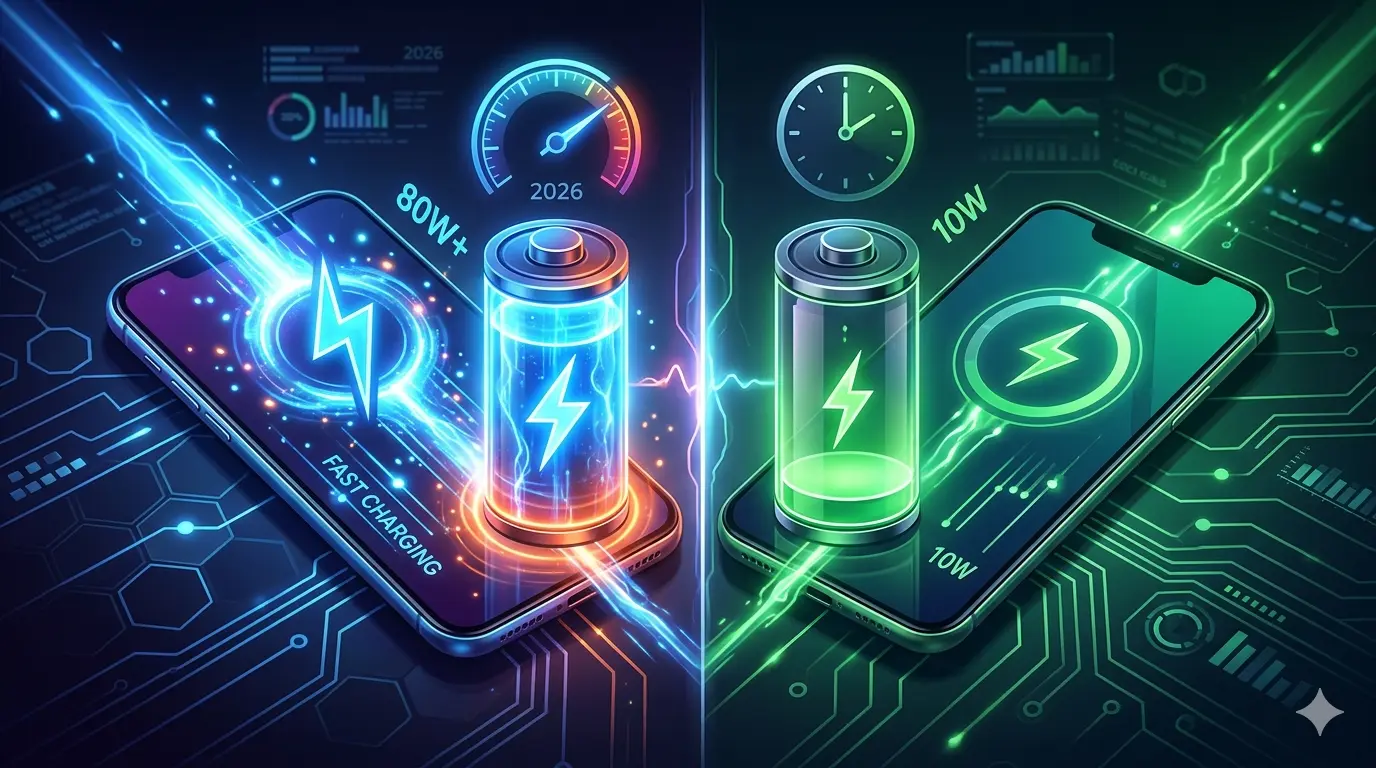
Fast Charging vs Normal Charging: What Actually Damages Battery? (2026 Guide) Leave a comment
Smartphones are faster than ever but so is charging. From 10W basic chargers to 120W hypercharge, users often ask one important question: does fast charging damage your battery? If you’re using fast chargers daily or relying on power banks during load shedding in Pakistan, understanding the truth about fast charging vs normal charging is critical.
Let’s break down the myths, science, and real-world usage so you can protect your battery and make smarter buying decisions.
What is Fast Charging vs Normal Charging?
Normal Charging
Normal charging typically delivers 5W to 10W power, charging your phone slowly over several hours. It generates less heat and is considered safer for long-term battery health.
Fast Charging
Fast charging uses higher wattage (18W, 33W, 67W, or even 120W) to charge your device much faster often reaching 50% in 20–30 minutes.
Modern fast charging technologies include:
- USB Power Delivery (PD)
- Qualcomm Quick Charge
- Proprietary systems like Xiaomi HyperCharge
For example, using a high-speed adapter like the Xiaomi 33W combo charger can significantly reduce charging time for busy users.
Why Battery Health Matters in 2026
In 2026, smartphones are more powModern smartphones are more powerful than ever, but battery technology hasn’t evolved at the same speed, leading to ongoing battery health issues. Lithium-ion batteries naturally degrade over time, and heat remains the biggest factor that damages battery life.
In Pakistan, load shedding, frequent power bank use, and overnight charging make proper charging habits even more important.
Does Fast Charging Really Damage Your Battery?
The Short Answer:Fast charging does not directly damage your battery but it can if used improperly.
Fast charging works by increasing voltage and current, which leads to more heat generation. This heat is the main reason batteries age faster, as it accelerates chemical degradation inside lithium-ion cells. However, modern smartphones are designed to handle this.
They include advanced features like temperature control, adaptive charging, and power regulation chips to manage heat and protect the battery. That’s why fast charging is generally safe especially when you use high-quality, certified chargers and cables.
Real Use Cases in Pakistan
Load Shedding & Travel
When electricity is unreliable, fast charging becomes essential.
A reliable option like the Xiaomi 10000mAh Power Bank helps users quickly top up their phones during outages without waiting hours.
Office & Daily Use
Users working long hours prefer quick top-ups during breaks rather than slow overnight charging.
Car Charging
For people commuting in cities like Lahore or Karachi, a fast car charger like the Mi 67W Car Charger ensures your phone stays powered on the go.
Fast Charging vs Normal Charging (Comparison)
| Feature | Fast Charging | Normal Charging |
|---|---|---|
| Speed | Very fast (30–60 min) | Slow (2–3 hours) |
| Heat | Higher | Lower |
| Convenience | High | Low |
| Battery Wear | Slightly higher (if misused) | Minimal |
| Best Use | Busy lifestyle, emergencies | Overnight charging |
What Actually Damages Your Battery?
Here are the real battery killers—not just fast charging.
Excessive heat is one of the biggest threats to battery health. Charging your phone under a pillow or in hot environments can damage the battery much faster than fast charging itself.
Another major issue is using cheap or fake chargers. Low-quality accessories can overheat your device and deliver unstable voltage, which harms the battery over time.
Using certified options like the Xiaomi 20W Type-C Charger helps ensure stable power delivery and better safety for long-term use.
Overcharging (100% for Long Hours)
Keeping your phone at 100% overnight increases battery stress.
Deep Discharging (0%)
Letting your battery drop to 0% frequently reduces lifespan.
Best Charging Practices (Expert Recommendations)
To maximize battery health:
✔ Keep battery between 20%–80%
✔ Avoid charging in hot environments
✔ Use original or high-quality cables
✔ Don’t use phone heavily while charging
✔ Prefer slow charging at night
For example, using a durable cable like the Xiaomi USB-C cable ensures efficient and safe power flow without overheating.
Buying Guide: Choosing the Right Charger in Pakistan
When buying a charger or cable, consider:
1. Wattage Compatibility
Don’t buy a 120W charger if your phone supports only 18W.
2. Brand Reliability
Trusted brands reduce risk of overheating or voltage spikes.
3. Cable Quality
Fast charging depends heavily on cable quality not just the adapter. A high-quality option like the Joyroom Type-C to Lightning PD cable is ideal for iPhone users needing stable fast charging.
Fast Charging Myths (Debunked)
Myth 1: Fast Charging Always Damages Battery
False – Only poor usage habits do
Myth 2: Slow Charging is Always Better
Not necessarily modern fast charging is optimized
Myth 3: Charging Overnight is Safe
Only partially long exposure at 100% can degrade battery
When Should You Use Fast Charging?
Use fast charging when:
- You’re in a hurry
- Traveling or commuting
- Facing power outages
Avoid it when:
- Charging overnight
- Device is already hot
Expert Verdict (EEAT-Based Insight)
From a technical and real-world perspective:
Fast charging is safe for daily use
Battery damage is caused by heat + poor charging habits
Using quality accessories is more important than charging speed
For Pakistani users, combining fast charging with smart usage is the best strategy.
Conclusion
So, fast charging vs normal charging what actually damages your battery?
The answer isn’t as simple as “fast is bad.”
The real culprits are heat, poor-quality chargers, and bad habits.
If you:
- Use certified chargers
- Avoid overheating
- Charge smartly
Your battery will last much longer even with fast charging. Explore latest mobile accessories and smart charging solutions on celleks.pk to upgrade your charging experience safely.
FAQs
1. Does fast charging reduce battery life in Pakistan?
Fast charging itself doesn’t significantly reduce battery life—heat and poor-quality chargers do.
2. Is it better to slow charge overnight?
Yes, slow charging overnight is safer as it reduces heat and stress on the battery.
3. Which charger is best for battery health?
Certified chargers with proper wattage like Xiaomi or Joyroom adapters are best for safe charging.
4. Can I use fast charging every day?
Yes, modern smartphones are designed for daily fast charging—but avoid overheating.
5. Are power banks safe for fast charging?
Yes, high-quality power banks like Xiaomi models are safe and useful during load shedding.
6. What is the best charging percentage for battery life?
Keeping your battery between 20% and 80% is ideal.
7. Does using phone while charging damage battery?
Yes, it increases heat and can degrade battery faster.
8. Is wireless fast charging harmful?
Wireless charging generates more heat than wired, so use it carefully and avoid long sessions.
9. Which is better: 33W or 67W charger?
It depends on your phone’s compatibility—higher wattage isn’t always better.
10. What are common battery mistakes in Pakistan?
Overnight charging, using cheap chargers, and charging in hot environments are the most common issues.